This reflection is part of a three‑part series exploring trauma from a holistic and faith‑centered perspective. Each post stands alone, yet together they form a gentle journey from understanding trauma, to recognising its imprint, to discovering how Scripture speaks into our pain.

Introduction
Trauma and Scripture meet in the shared language of suffering, hope, and restoration. The Bible may not use the modern term trauma, yet its pages are filled with stories of people who have endured loss, fear, betrayal, and despair — and found meaning beyond them. In this way, the Bible becomes not only a spiritual text but also a mirror of the human condition.
Trauma as Part of the Human Story
Throughout Scripture, trauma is woven into the lives of individuals and communities:
Job experiences profound loss and questions the justice of his suffering (Job 1–3).
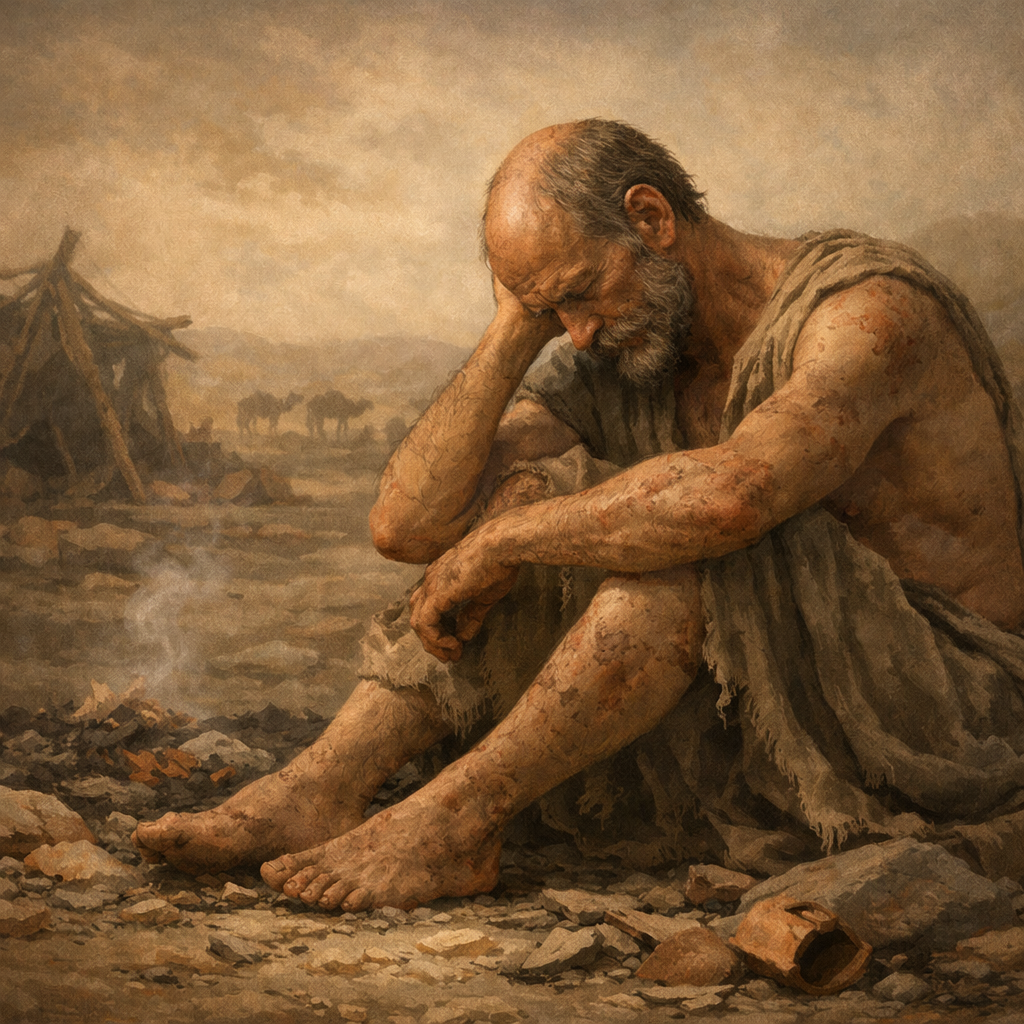
In the opening chapters of Job, we meet a man whose world collapses in a single sweep. His possessions, servants, and even his children are taken from him — not because of wrongdoing, but through circumstances that defy human logic. Job’s grief is raw and unfiltered; he tears his robe, shaves his head, and falls to the ground in worship, uttering the haunting words:
“Naked I came from my mother’s womb,
And naked shall I return there.
The Lord gave, and the Lord has taken away;
Blessed be the name of the Lord.” (Job 1:21) NKJV
Yet as the silence deepens, Job begins to wrestle with the unbearable question: Why does the righteous suffer? His lament in chapters 2–3 moves from acceptance to anguish. He curses the day of his birth, longing for release from pain, and begins to question the justice of his suffering:
“May the day perish on which I was born,
And the night in which it was said,
‘A male child is conceived.’ (Job 3:3) NKJV
This moment marks the turning point — where faith meets the limits of human understanding. Job’s cry is not rebellion but relationship: he speaks directly to God, refusing to let silence define his pain. In doing so, he models a faith that dares to question, a faith that holds on even when the world no longer makes sense.
David pours out anguish in the Psalms, giving voice to fear and isolation (e.g., Psalm 42; Psalm 13).
David’s prayers in the Psalms often rise from places of deep emotional distress. In Psalm 42, he speaks from a place of spiritual dryness and longing, describing a soul that feels forgotten and overwhelmed. His words capture the ache of isolation:
My tears have been my food day and night,
While they continually say to me,
“Where is your God?” (Psalm 42:3) NKJV
He names the internal struggle honestly — the feeling of being cast down, the heaviness within, the sense that God seems distant. Yet even in this emotional fog, David keeps turning his face toward hope, repeating the refrain:
Why are you cast down, O my soul?
And why are you disquieted within me?
Hope in God, for I shall yet praise Him
For the help of His countenance. (Psalm 42:5) NKJV
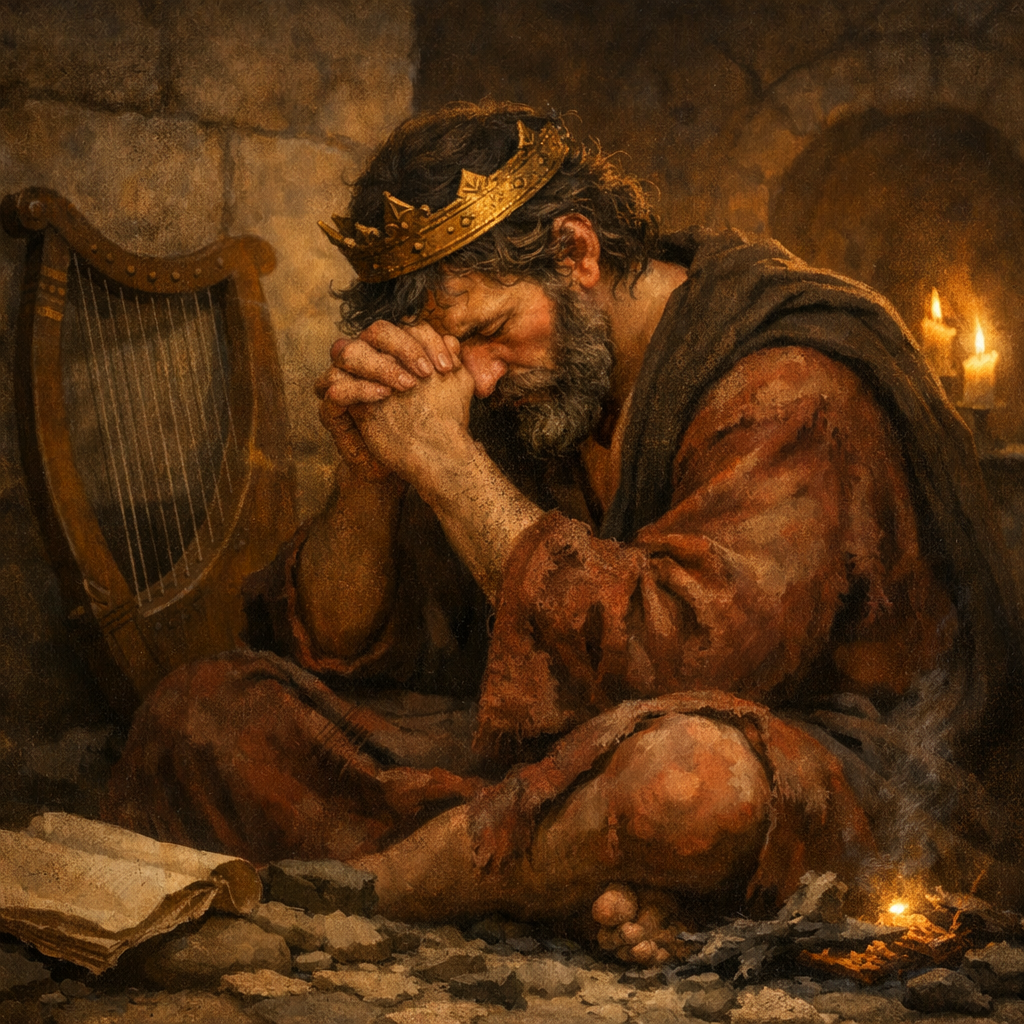
King David Lamenting During the Psalms
In Psalm 13, David’s anguish becomes even more personal and urgent. He cries out from a place where fear and abandonment feel suffocating:
How long, O Lord? Will You forget me forever?
How long will You hide Your face from me? (Psalm 13:1) NKJV
This is not polished theology — it is the raw voice of someone who feels unseen, unheard, and alone. David gives language to the experience many trauma survivors know well: the fear that pain will never end, and the isolation that comes when suffering feels invisible to others.
Yet even here, David’s lament moves toward trust. His final words shift from despair to a quiet, stubborn faith:
But I have trusted in Your mercy;
My heart shall rejoice in Your salvation. (Psalm 13:5) NKJV
David’s honesty shows that Scripture does not silence anguish — it sanctifies it.(Sanctification is the ongoing work of God shaping believers to become more like Christ, gradually transforming their character and desires through the Holy Spirit.) His psalms become a safe place where fear, isolation, and hope can coexist, offering a model for how we can bring our own trauma before God without shame.
Jeremiah and the prophets speak of collective trauma — exile, displacement, and the collapse of identity (Jeremiah 29; Lamentations 1).
Jeremiah’s writings capture not just individual suffering, but the trauma of an entire people whose world has been torn apart. When Jerusalem falls and the people are carried into exile, the nation experiences a profound rupture — the loss of home, temple, community, and the very sense of who they are. Trauma here is not private; it is shared, generational, and deeply embodied.
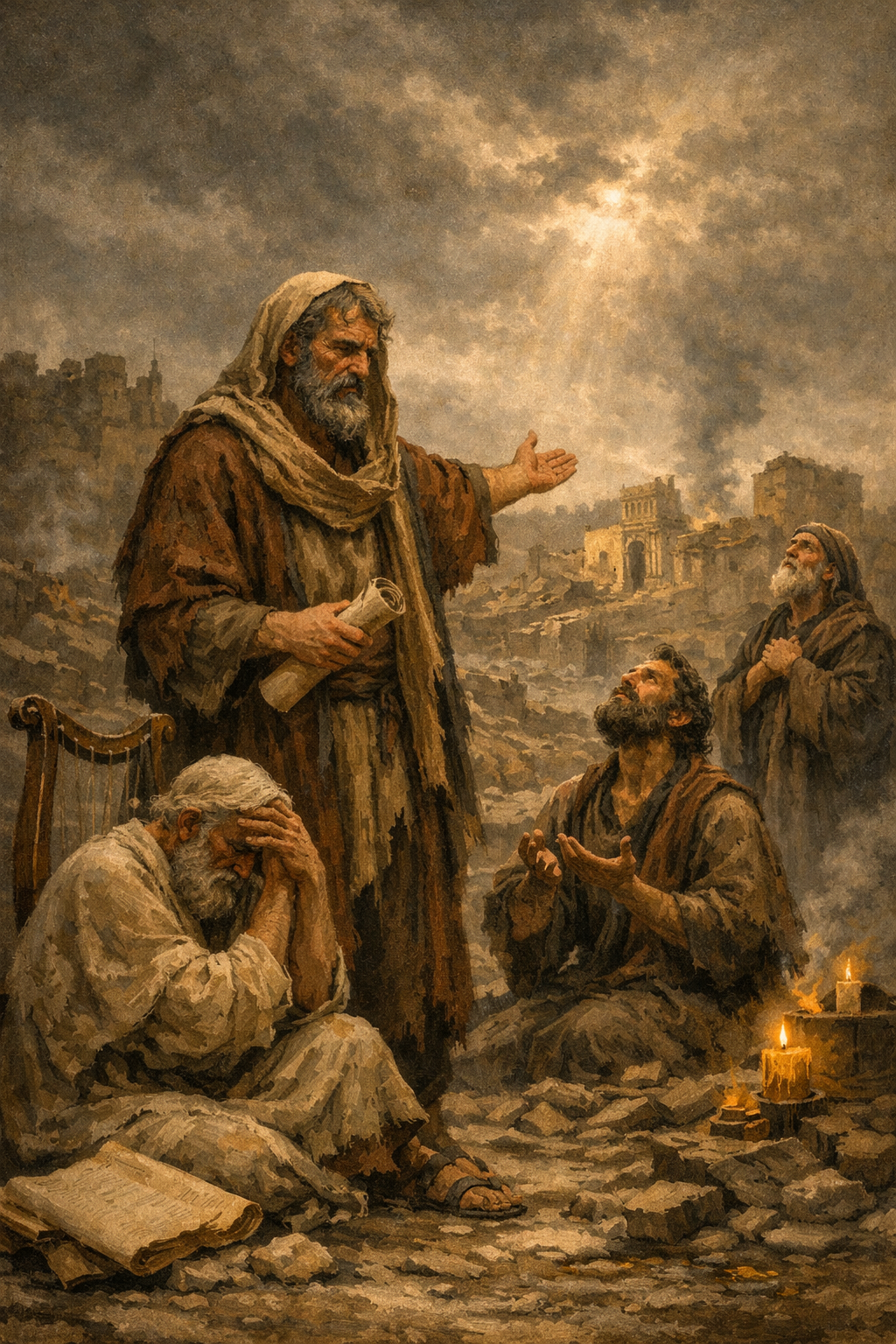
Jeremiah and the prophets
In Jeremiah 29, the prophet writes to a displaced people living in Babylon, far from everything familiar. His words acknowledge the pain of exile while offering a surprising instruction:
“Build houses and dwell in them; plant gardens and eat their fruit”. (Jeremiah 29:5) NKJV
This is not a dismissal of suffering — it is an invitation to begin healing in the midst of it. Jeremiah recognises that trauma has dislocated their identity, and he calls them to rebuild slowly, patiently, even while the wound is still fresh.
Lamentations 1 gives voice to the raw grief of the city itself. Jerusalem is personified as a woman sitting alone in her sorrow, abandoned and grieving the collapse of her world:
“She weeps bitterly in the night,
Her tears are on her cheeks;
Among all her lovers
She has none to comfort her.
All her friends have dealt treacherously with her;
They have become her enemies”. (Lamentations 1:2) NKJV
This is the language of collective trauma — a community mourning the loss of safety, belonging, and identity. The prophets do not sanitise this pain. They allow the grief to be spoken, witnessed, and held before God.
Jeremiah and the prophetic writings show that trauma is not only an individual experience. It can shape a people, a culture, a generation. And yet, even in exile, God speaks words of presence, restoration, and hope — reminding them that trauma does not have the final word.
Mary and the disciples witness the crucifixion, an event that embodies both personal and communal grief (John 19:25–30).
The crucifixion is one of the most profound moments of trauma in Scripture — not only for Jesus, but for those who loved Him and stood helplessly at the foot of the cross. John 19 shows us a scene of deep personal grief as Mary, the mother of Jesus, stands near the cross with other women and the beloved disciple. Their presence is quiet but courageous; they remain even as hope seems to collapse before their eyes.
Mary’s suffering is intensely personal. She watches her son — innocent, gentle, and righteous — endure a brutal death. The emotional weight of this moment echoes Simeon’s earlier prophecy:
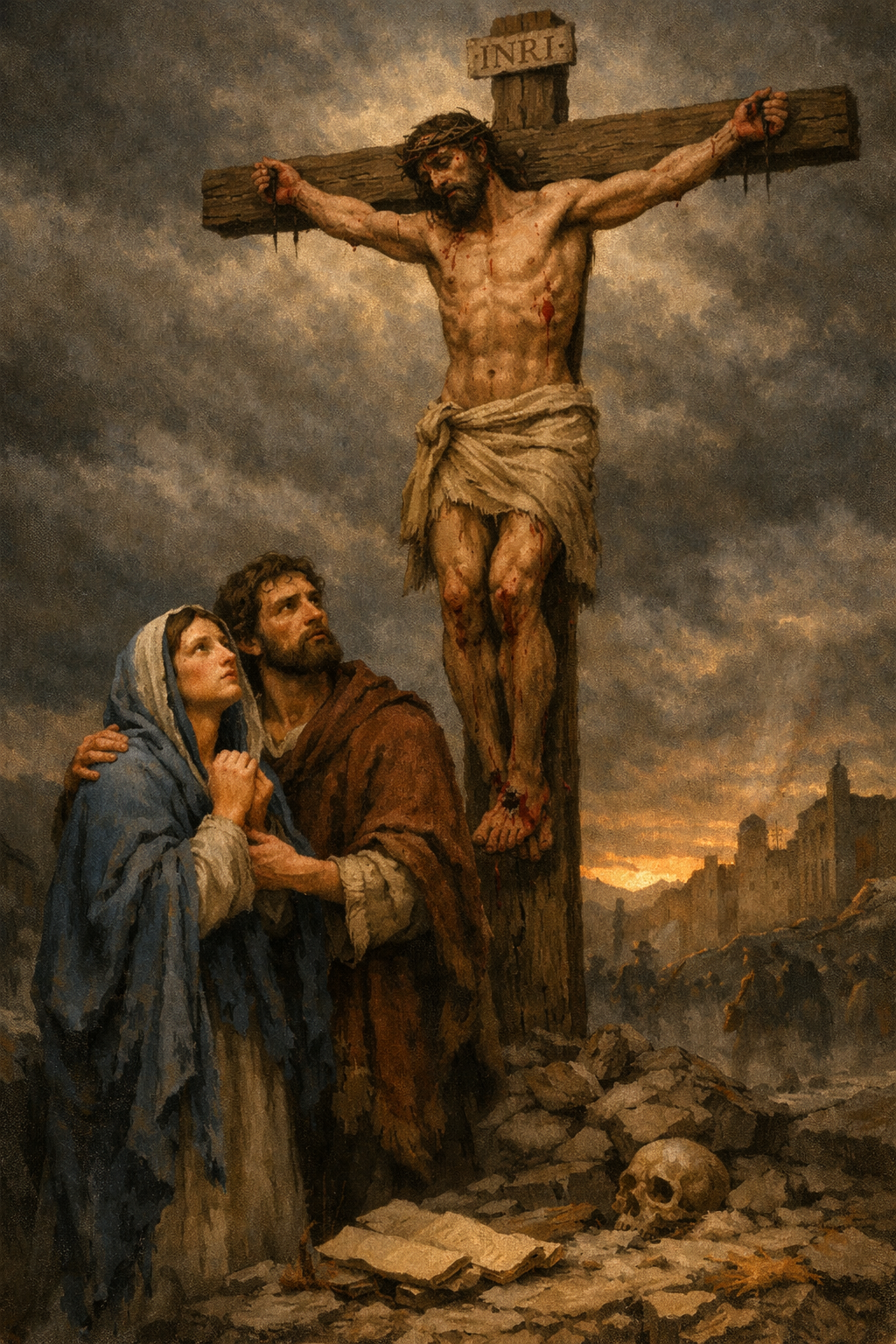
The Crucifixion with Mary and the disciple at the cross
(yes, a sword will pierce through your own soul also), that the thoughts of many hearts may be revealed. (Luke 2:35) NKJV
At the same time, the disciples experience a communal grief. The One they believed would redeem Israel is dying publicly, shamefully, violently. Their identity, expectations, and sense of future are shaken. The crucifixion becomes a collective trauma — a moment where the community’s hopes fracture.
Jesus’ final words, spoken with deliberate intention, deepen the emotional gravity:
“So, when Jesus had received the sour wine, He said, “It is finished!” And bowing His head, He gave up His spirit”. (John 19:30) NKJV
This is not only a theological declaration; it is the closing breath of a life lived in love, witnessed by those who now stand in the shock of loss. The grief at the cross is layered — personal, relational, communal, and spiritual. It holds the weight of sorrow, confusion, and the collapse of what the disciples thought their story would be.
Yet even in this trauma, Jesus offers care. He entrusts Mary to the beloved disciple:
When Jesus therefore saw His mother, and the disciple whom He loved standing by, He said to His mother, “Woman, behold your son!” (John 19:26) NKJV
This act shows that in moments of deep suffering, God still weaves connection, belonging, and care. The crucifixion becomes not only a moment of grief, but the beginning of a new community formed through shared pain and future hope.
These narratives remind us that trauma is not foreign to faith; it is part of the journey of being human.
The Body and Memory of Suffering
In the crucifixion, trauma becomes visible and embodied. Christ’s wounds remain after resurrection — a profound theological truth. Healing does not erase the scars; it transforms them. The risen Christ carries the marks of suffering as testimony, not shame. Then He said to Thomas, “Reach your finger here, and look at My hands; and reach your hand here, and put it into My side. Do not be unbelieving but believing.”(John 20:27). NKJV
This image speaks deeply to those who live with trauma: recovery does not mean forgetting, but integrating what was broken into a new wholeness. Healing is not the erasure of painful memories; it is the slow, courageous work of allowing those memories to find their place within a larger story. What was shattered is not discarded — it becomes part of the landscape of who we are, held with compassion rather than fear.
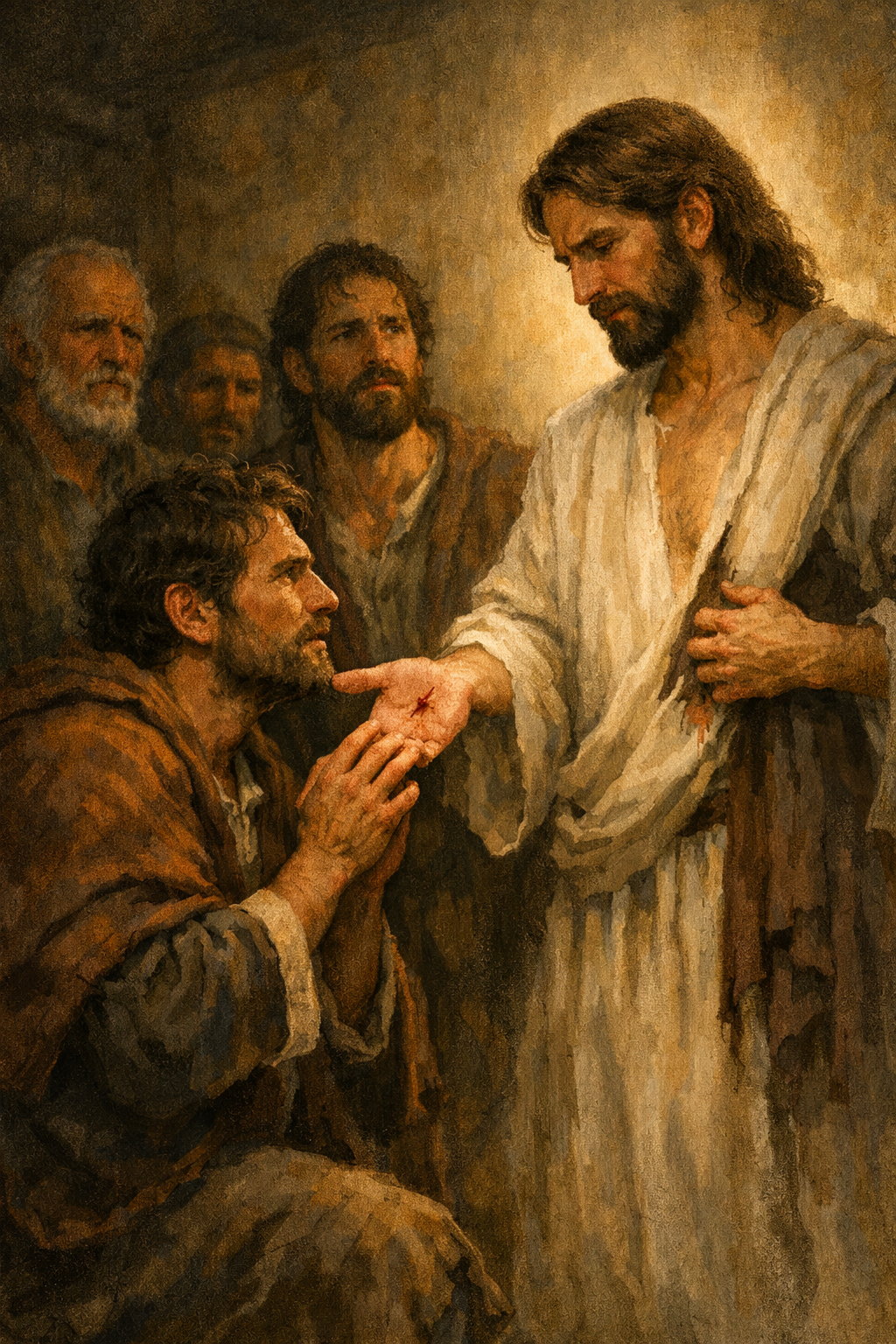
In this sense, wholeness is not a return to who we were before the wound. It is the emergence of a self that has been shaped, strengthened, and softened by what was endured. Trauma becomes woven into a life that is still capable of beauty, connection, and hope. The cracks do not define the person — they simply reveal where the light has entered and where resilience has grown.
The Bible’s Response to Trauma
Scripture offers a rhythm that mirrors trauma recovery:
Lament — Honest expression of pain before God. The Psalms model this beautifully:
Out of the depths I have cried to You, O Lord” (Psalm 130:1). NKJVPresence — For You are the God of my strength; Why do You cast me off? Why do I go mourning because of the oppression of the enemy?” (Isaiah 43:2). NKJV
Restoration — The gradual re‑knitting of identity and hope, seen in stories of return, renewal, and resurrection (e.g., Isaiah 61:1–4; John 21:15–19). Please read at your own leisure.
This rhythm reflects the movement from chaos to meaning — from fragmentation to integration.
Chaplaincy and Holistic Practice
For chaplains and holistic practitioners, the intersection of trauma and Scripture invites a way of being that is both clinical and pastoral. It calls for:
Listening without judgment, allowing lament to be voiced.
Recognising the sacred in suffering, where healing may begin.
Holding space for transformation, where faith and psychology meet.
In this space, trauma is not treated as a problem to fix but as a story to honour — one that can lead toward redemption.
Closing Reflection
The Bible does not promise a life free from trauma. Instead, it offers companionship in the midst of it — a God who enters human pain and transforms it from within. In that truth lies the heart of redemption: not escape from suffering, but the discovery of meaning through it.
“He heals the broken-hearted and binds up their wounds.” — Psalm 147:3 NKJV
We’d love to hear from you
Your thoughts, reflections, and stories matter. Feel free to share what resonates with you in the comments below — your voice adds depth and connection to this conversation.