What is a chaplain?
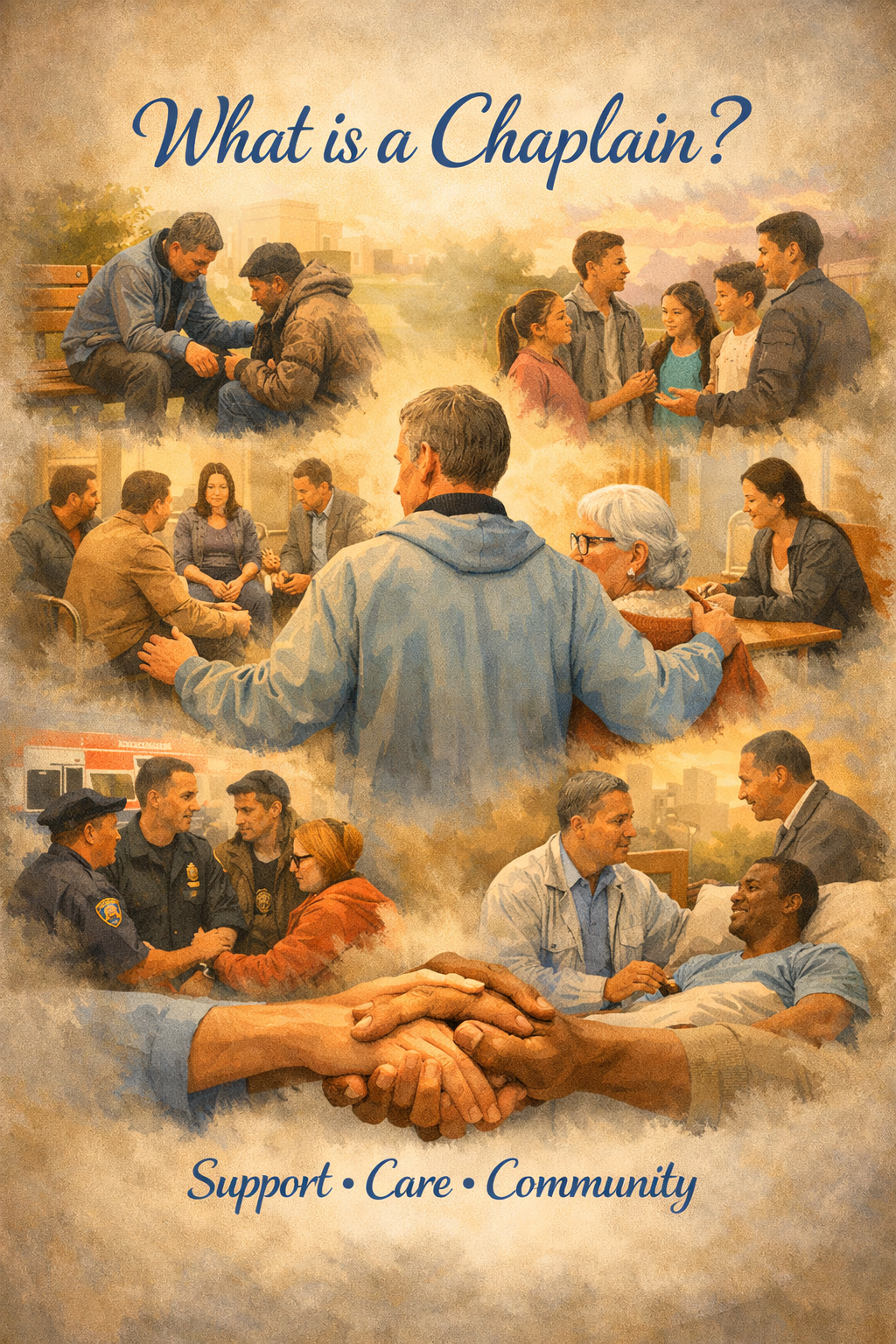
A chaplain is a steady, compassionate presence in the moments when life feels uncertain, painful, or deeply human. Working across hospitals, hospices, prisons, workplaces, schools, and community organisations, chaplains support people of any faith, mixed faith, or no faith at all. Their role is rooted not in doctrine, but in attentive presence.
Chaplains are trained in spiritual, emotional, and existential care. They listen without judgement, help people explore meaning, and offer space to reflect during times of illness, grief, crisis, ethical tension, or major life change. They walk alongside individuals and families through diagnosis, recovery, loss, transition, and end‑of‑life—providing calm when everything else feels overwhelming.
Importantly, chaplains do not arrive with answers or agendas. They accompany. They hold space. They help people find clarity, strength, and dignity in their own way, at their own pace.
Chaplaincy is the quiet work of being present—so no one has to face difficult moments alone.